I have a short piece out in the July issue of Newsli, the magazine of the UK’s Association of Sign Language Interpreters (ASLI). You can find the full article here.
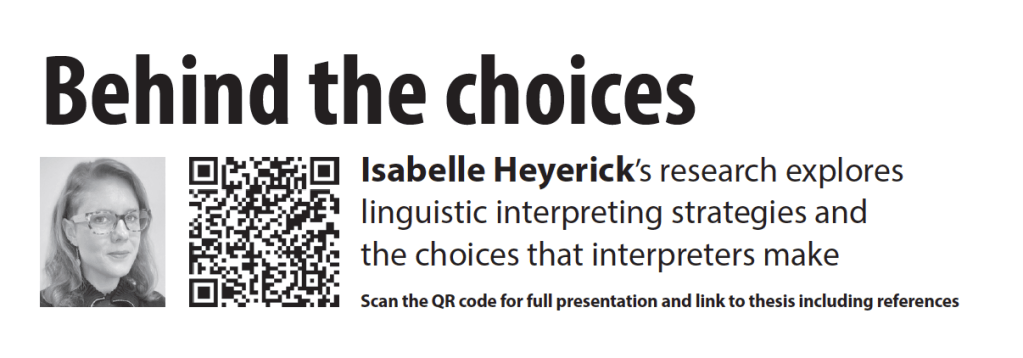
It grew out of my PhD research on the linguistic strategies signed language interpreters use while working, and what actually drives those choices in the moment. Most people think of interpreting as translating words from one language into another, but that oversimplifies what’s really happening. Interpreters are managing an intense cognitive load in real time; perceiving, processing, producing, and monitoring their own output all at once. The linguistic choices they make (substitution, compression, repair, and so on) are one of the main ways they handle that load while still working toward a communicative goal.
In the article, I walk through the three types of triggers that push an interpreter toward using a particular strategy, a unexpected finding of my researcg, and why I think all of this matters for accountability and transparency in the profession. Not just for interpreters but also for interpreting service users.
I hope you enjoy the read.

